

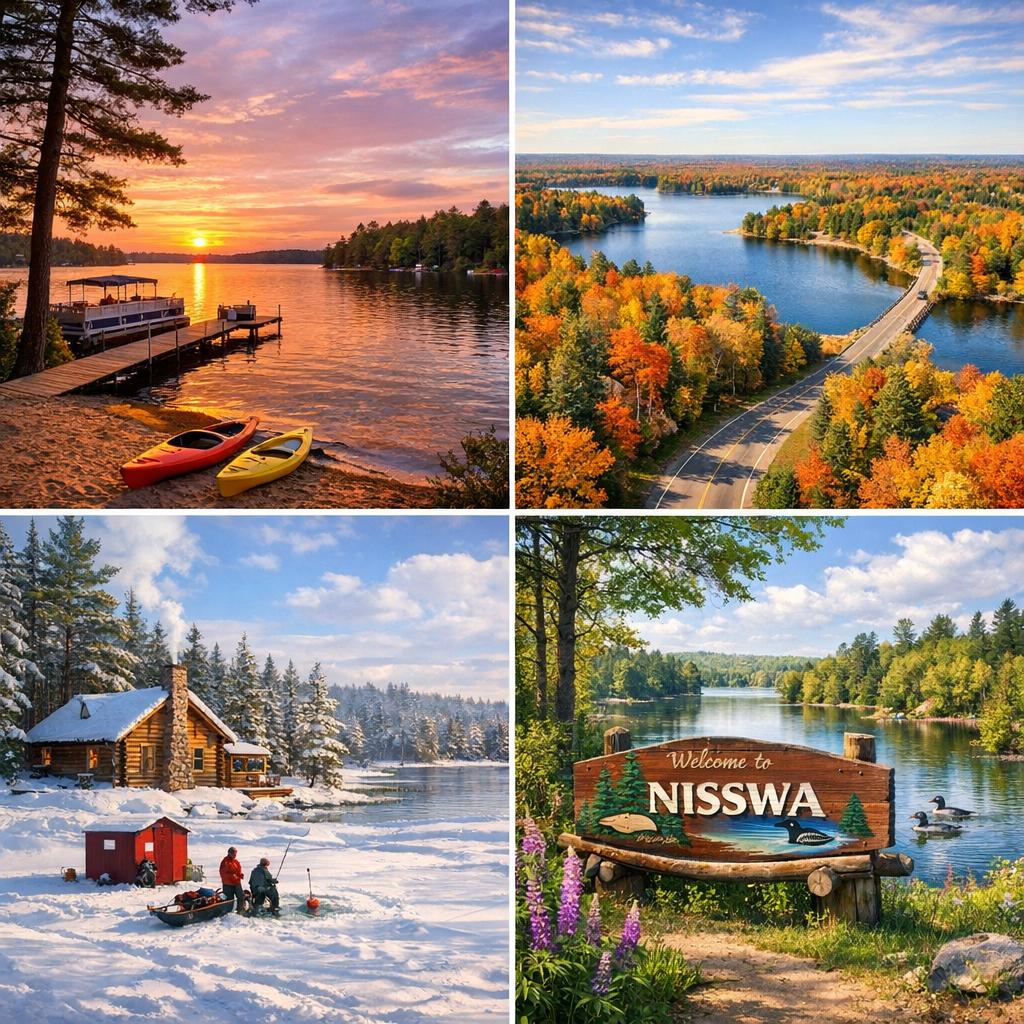
Nisswa, Minnesota, experiences a humid continental climate characterized by distinct seasonal variations. Understanding these patterns is essential for both residents and visitors to make the most of what the area offers throughout the year.
Seasonal Climate Overview
Winter: Spanning from late November to early March, winters in Nisswa are cold and snowy. Average high temperatures remain below freezing, with January being the coldest month, averaging highs around 18.8°F (-7.3°C) and lows near -0.3°F (-17.9°C). Snowfall is common, contributing to the region’s winter sports activities.
Spring: Transitioning from March through May, spring sees a gradual warming trend. By May, average highs reach approximately 65.2°F (18.4°C), and lows around 43.5°F (6.4°C). This season also brings increased precipitation, averaging 3.45 inches (87.63 mm) in May, supporting the blooming flora and replenishing local water bodies.
Summer: Lasting from mid-May to mid-September, summers are warm and pleasant. July stands out as the warmest month, with average highs of 79.2°F (26.2°C) and lows of 58.6°F (14.8°C). The season is ideal for outdoor activities, with numerous lakes and trails accessible. Rainfall is relatively evenly distributed, with June receiving about 4.23 inches (107.44 mm).
Autumn: From mid-September to late November, autumn features cooler temperatures and vibrant foliage. October averages highs of 53.6°F (12°C) and lows of 34.9°F (1.6°C). This period is popular for hiking and enjoying the scenic beauty of the changing leaves.
Environmental Considerations
Nisswa is part of the Crow Wing River Watershed, encompassing over 627 lakes and numerous streams. This rich aquatic environment supports diverse wildlife and offers recreational opportunities. However, it also necessitates mindful environmental stewardship.
Recent assessments have identified certain water bodies within the watershed as impaired, indicating they do not meet water quality standards. Factors contributing to this include runoff from agricultural and urban areas, which can introduce pollutants into the water system. Residents and visitors are encouraged to adopt practices that minimize environmental impact, such as proper waste disposal, using phosphorus-free fertilizers, and supporting local conservation initiatives.
By understanding Nisswa’s climate and actively participating in environmental preservation, the community can ensure the region remains a vibrant and healthy place for all.