

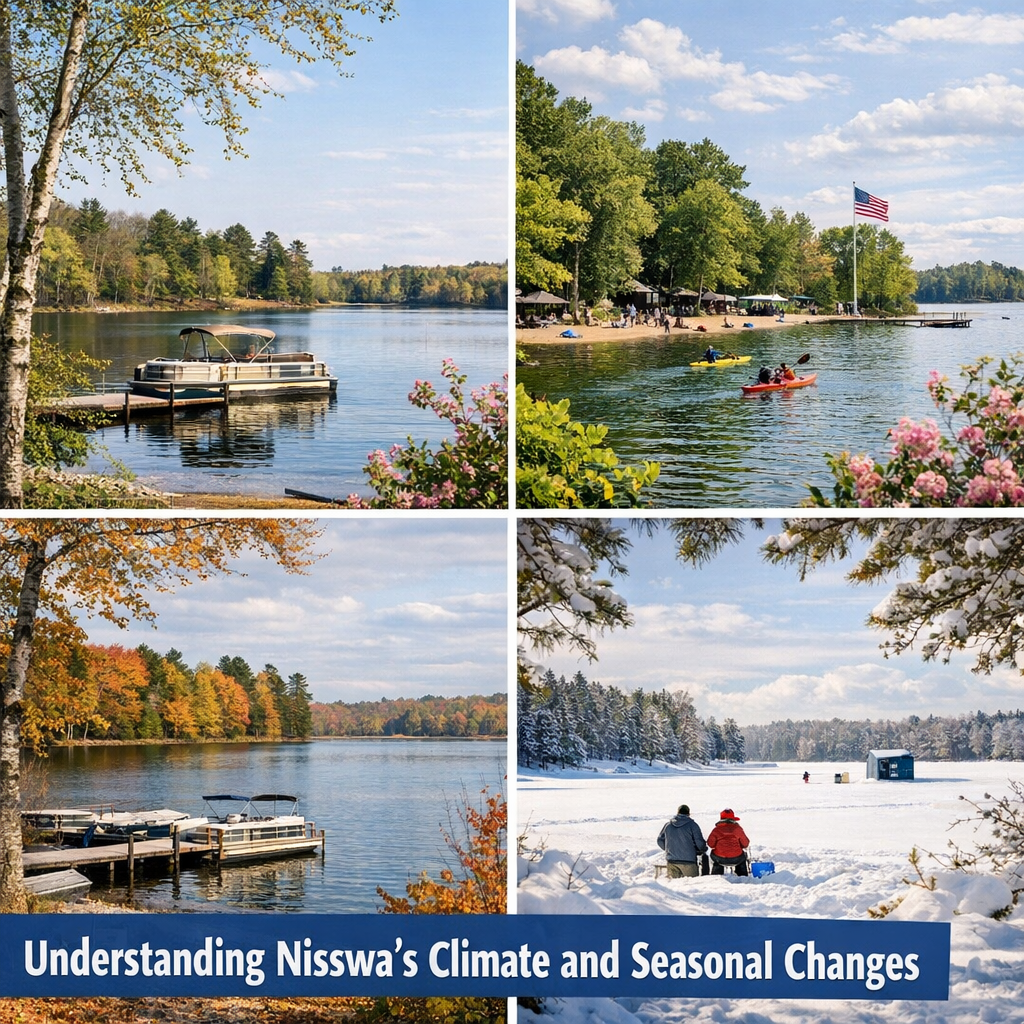
Nisswa, Minnesota, experiences a diverse climate characterized by four distinct seasons, each offering unique weather patterns and environmental conditions. Understanding these seasonal changes can help residents and visitors better appreciate and prepare for the local environment.
Winter
Winter in Nisswa is typically cold and snowy. Average low temperatures in January can drop to around -0.3°F (-17.9°C), with average highs reaching 18.8°F (-7.3°C). Snowfall is common, contributing to the region’s winter landscape.
Spring
As spring arrives, temperatures gradually warm. By May, average highs reach approximately 65.2°F (18.4°C), with lows around 43.5°F (6.4°C). This season also sees an increase in precipitation, averaging 3.45 inches (87.63 mm) in May, supporting the blooming flora and replenishing local water bodies.
Summer
Summers are warm and pleasant, with July being the warmest month. Average highs in July are about 79.2°F (26.2°C), and lows around 58.6°F (14.8°C). This season is ideal for outdoor activities, with longer daylight hours and comfortable temperatures.
Fall
Fall brings cooler temperatures and vibrant foliage. By October, average highs decrease to 53.6°F (12°C), and lows to 34.9°F (1.6°C). Precipitation remains moderate, averaging 3.01 inches (76.45 mm), preparing the environment for the upcoming winter.
Understanding these seasonal patterns allows residents and visitors to plan activities accordingly and fosters a deeper appreciation for Nisswa’s natural beauty throughout the year.